The Nerve Flossing Technique for Stubborn Leg Pain
I will never forget the morning I sat on the edge of my bed, staring at my left sock like it was an Everest I simply could not climb. Every time I leaned forward, a hot wire of electricity zapped from my lower back all the way to my pinky toe. I spent weeks doing every hamstring stretch in the book, only to find that my hips felt even more locked than before. It was a frustrating cycle of pain and failed remedies that left me feeling older than my years. I thought I was broken, but I was just misinformed. We are going to change that for you today. I am going to show you how a simple shift from stretching to gliding can be the missing piece in your recovery puzzle.
Stop Stretching That Tight Hamstring Until You Read This
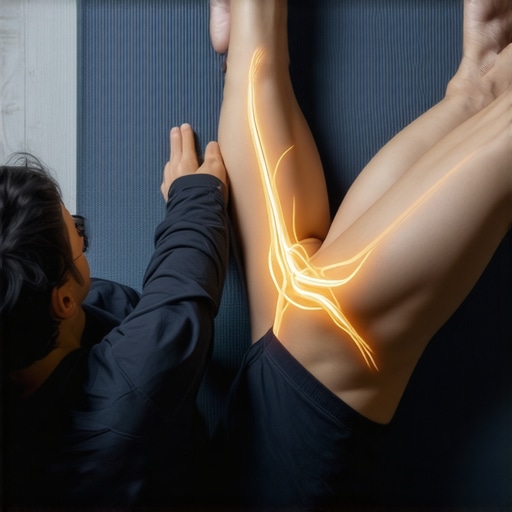
We have been conditioned to think that tight means stretch harder. If I could go back and talk to my younger self, I would scream, Stop pulling on that nerve! Nerve pain is not a muscle issue; it is a space issue. When a nerve gets snagged or compressed—often what people call sciatica—it does not want to be elongated like a rubber band. It wants to glide. This is where the nerve flossing technique comes in, and it has been a total game-changer for my daily mobility. Whether you are struggling with how your sleep position affects your sciatica or you just want to walk the dog without that nagging ache, we are going to fix the way you move. Have you ever spent a week stretching a pain only to realize it is actually getting worse? Let me know, because I have been there too.
Is Nerve Flossing Actually Worth the Hype?
I get it. It sounds like something you would do at the dentist, not for your leg. I was a huge skeptic too, especially after the truth about inversion tables did not live up to my expectations. But here is the kicker: research published in the Journal of Orthopaedic & Sports Physical Therapy shows that neural mobilization can decrease nerve sensitivity way more effectively than traditional static stretching. The biggest mistake I made early on? I thought I had to feel the burn. In reality, nerve flossing should feel almost like nothing is happening while you are doing it. If you feel pain, you are overdoing it. By using proven chiropractic strategies and this specific gliding motion, we can finally give those stubborn nerves the breathing room they deserve.
Move Your Nerves Like a Thread Through a Straw
Think of your sciatic nerve as a long, delicate silk thread running through a series of narrow straws (your muscles and joints). When you stretch a tight hamstring, you are essentially grabbing both ends of that thread and pulling as hard as you can. If the thread is snagged somewhere inside a straw, pulling it tight only makes the knot worse. Gliding, on the other hand, involves pulling one end of the thread while simultaneously feeding more slack into the other. This creates movement without tension, which is exactly how you restore your range and calm down an angry nervous system. I learned this the hard way after a month of aggressive yoga only made my leg feel like it was on fire. The moment I swapped “pulling” for “sliding,” my recovery shifted from weeks to days.
Find Your Foundation on a Solid Chair
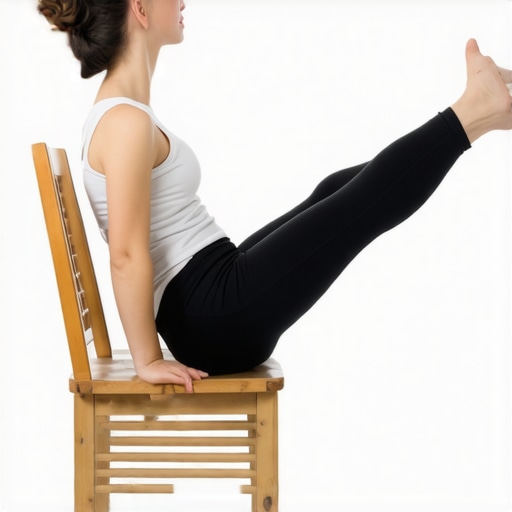
To start flossing your sciatic nerve, you need a flat, firm surface. Avoid the couch; you want a surface where your hips are higher than your knees, similar to the simple way to sit on a stool without pain. Sit right on the edge of the seat. Now, let your upper back round forward into a “slump.” Drop your chin toward your chest. This “pre-loads” the system from the top down. If this position alone causes a massive zap of pain, stop. Your nerve is too sensitive right now, and you should focus on back pain recovery through gentler chiropractic adjustments first.
Master the Synchronized Leg and Head Dance
Here is where the magic happens. While staying in that slumped position, slowly straighten your affected leg. As you kick your foot out, I want you to look up at the ceiling. This creates slack at the neck while tensioning the bottom. Then, as you bend your knee back to the starting position, tuck your chin back to your chest and point your toes toward the floor. It feels like a coordinated dance, and at first, I felt incredibly clumsy. I remember doing this in my kitchen while my coffee brewed, feeling like a total goofball as I rhythmically looked up and down. I thought I was doing it wrong because it didn’t “hurt” like my usual stretches. But when I stood up to grab my mug, that sharp “catch” in my glute was gone for the first time in months.
Why You Must Avoid the Burn
The most dangerous habit we have is the “no pain, no gain” mentality. With muscles, a little burn is fine. With nerves, a burn is a 911 call from your brain. If you feel a stretch or a zing, you are pulling too hard. You want to stay at a “level 2” out of 10 for intensity. This is a common theme in proven strategies for back pain relief—the goal is to desensitize, not to challenge. If you push it, the nerve will swell, the space will get tighter, and you’ll be back to square one.
Adjusting for Neck and Shoulder Tension
While we are focusing on the lower body, many of my patients find that their pinched nerve in the neck is actually contributing to their overall spinal tension. The nervous system is one continuous loop. If you find that the “slump” part of this exercise makes your hands tingle, it means your upper body needs attention too. You can’t fix the foundation of a house if the roof is caving in. Keeping your shoulders relaxed and not shrugging during the glide is vital for ensuring the movement stays focused on the lower chain.
But even once you master the glide, there is a deeper layer of recovery that most people—and even some trainers—completely miss. I spent years thinking that ‘stiffness’ was a signal that I needed to stretch more or work harder on my ‘abs.’ The reality is far more nuanced. Many of my patients come in obsessed with the idea of ‘core strength,’ yet they are often making their issues worse by over-bracing. They think they need to do hundreds of sit-ups to protect their lower back, but this is a classic mistake. In my experience, a ‘rock-hard’ core often hides a non-functional pelvic floor, which is the real stabilizer of your lumbar spine. If you are just tightening your abs without engaging the bottom of your internal canister, you are essentially creating a pressure cooker in your abdomen. This is exactly why your pelvic floor might be the secret to solving back pain. Have you ever fallen into this trap where you think ‘more tension’ is the answer? Let me know in the comments. When you walk around with your stomach sucked in all day, you are not being ‘fit’; you are actually preventing your diaphragm from moving naturally. This leads to shallow chest breathing, which is a primary reason why your neck muscles tighten during stress. You cannot fix a neck issue if you are breathing like you are running a marathon while sitting at a desk. By learning how to breathe properly to reduce tension in your shoulders, you allow the secondary respiratory muscles in your neck to finally relax.
Can you have a herniated disc and feel zero pain?
This is the biggest ‘hidden nuance’ in spinal health that usually shocks my patients. We often focus too much on the ‘hardware’—the bones and discs—and ignore the ‘software,’ which is how your brain and nerves communicate. A landmark study published in the American Journal of Neuroradiology by Brinjikji et al. found that 37% of 20-year-olds and a staggering 80% of 50-year-olds have disc degeneration or bulges on an MRI despite having zero pain. This means that just because an image shows a ‘bulge,’ it is not necessarily the cause of your discomfort. If we only look at where it hurts, we miss the ‘why.’ For instance, why we look at your feet to solve your neck issues is often a mystery to new patients. But if your big toe isn’t moving or your arches have collapsed, your gait changes, your pelvis tilts, and your neck has to compensate just to keep your eyes level with the horizon. Similarly, how your vision impacts your neck position while working is a massive factor. If your eyes are straining to see a monitor, your neck muscles will lock up to stabilize your head, regardless of how much you stretch.  One final ‘oops’ factor to avoid: do not assume that because an exercise is ‘low impact,’ it is inherently safe. I see people make the bird dog mistake constantly, where they arch their back and flare their ribs, turning a stability move into a spine-crusher. True mobility mastery comes from knowing when to move and, more importantly, when to stay still. Focus on the quality of the glide, the depth of the breath, and the alignment of the whole chain rather than just chasing a ‘burn.'”Maintaining the progress you have made with nerve flossing and spinal alignment is where most people drop the ball. I have seen it a hundred times: a patient feels 80% better and suddenly stops their routine, only to end up back on my table two months later. The key is to stop treating mobility as a ‘fix’ and start treating it as ‘hygiene.’ Just like you brush your teeth to prevent cavities, you need a daily movement ritual to prevent your fascia from glueing together. I personally rely on why your back feels better when you keep moving as my guiding philosophy. If I am sitting for more than an hour, I feel the stiffness creeping in, and that is my cue to reset.
The Only Two Tools That Actually Sit in My Gym Bag
I am not a fan of fancy, expensive gadgets that take up half your living room. My recovery kit is surprisingly low-tech. First, I use a standard lacrosse ball—not a foam roller. A foam roller is too broad for the specific knots that cause referred pain. I use the ball to pin down specific trigger points in my glutes or under my scapula. This is a DIY version of how to use a tennis ball to fix that spot under your shoulder blade, and it is a total lifesaver after a long day of charting. Second, I recommend a simple, adjustable laptop stand. If you are working from a cafe, you must know how to set up your laptop at a coffee shop pain-free. If your screen isn’t at eye level, you are essentially asking for a pinched nerve. Using these tools daily is how you achieve chiropractic secrets to regain full mobility after injury without needing a constant professional ‘reset.’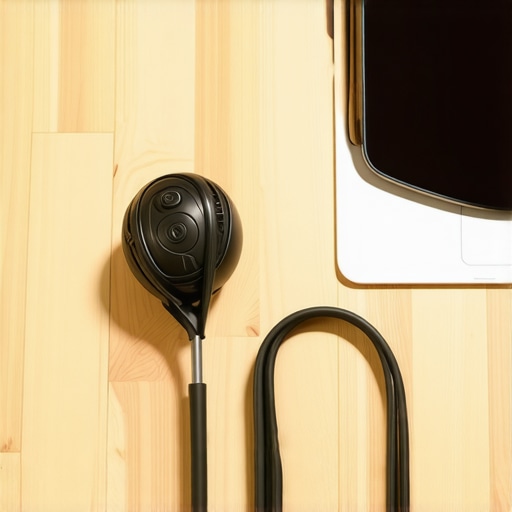
How do I maintain my spinal health over time?
Consistency beats intensity every single time. You don’t need a 60-minute yoga flow; you need three minutes of high-quality movement every few hours. I swear by the ‘Virtual Surgery’ concept popularized by Dr. Stuart McGill, a world-renowned spine biomechanics expert at the University of Waterloo. He suggests that if you treat your back as if you just had surgery—moving with precision and avoiding ‘sloppy’ spine flexion—you allow the tissues to desensitize and heal. This is why I emphasize the dead bug variation that actually fixes lower back instability. It trains your brain to keep your spine still while your limbs move, which is the definition of true core stability. To keep things fresh, I follow the 20-20-20 rule for desk workers and neck health to ensure my eyes and neck get a break. Looking forward, I predict we will see a massive shift toward wearable biofeedback sensors that vibrate when your posture slumps or your pelvic tilt goes off-track. Until then, we have to rely on our own internal awareness. I want you to try this right now: stand up, perform the Bruegger’s relief move to reverse hours of hunched sitting, and take three deep diaphragmatic breaths. This tiny 30-second investment is the difference between a productive afternoon and a week of nagging neck tension. If you’re unsure if your workspace is helping or hurting, take a moment to learn how to adjust your monitor to avoid eye and neck strain properly.
The Breakthroughs That Changed My Recovery
The most important lesson I’ve learned is that pain is a signal, not a life sentence. Early on, I thought every “zap” meant I was damaging my spine further, but the reality is that your nervous system is often just over-protective. Nerves aren’t muscles; you can’t bully them into relaxing. Learning how to tell if your back pain is serious versus just a sensitive nerve changed everything for my mental health. I also realized that recovery isn’t just what happens while you’re active; it’s how you rest. Knowing the best way to sleep after a chiropractic adjustment ensured that the progress I made during the day wasn’t lost overnight. Consistency in these small, daily habits is what builds a “bulletproof” spine over time.
The Minimalist Toolkit for Daily Alignment
I am a firm believer that you don’t need expensive equipment to stay mobile. My recovery bag consists of just two items. First, a simple lacrosse ball for targeted pressure. It is the DIY version of using a tennis ball to fix spots under your shoulder blade and is perfect for hitting those deep glute triggers that contribute to sciatica. Second, a portable laptop stand. Whether I’m at home or a cafe, I follow the rules for how to set up your laptop at a coffee shop pain-free to keep my neck and mid-back from slumping into that old, painful pattern. Lastly, a firm lumbar roll for the car helps maintain the natural lumbar curve during long commutes. These tools don’t just treat symptoms; they prevent the tension from building up in the first place.
Reclaim Your Right to Move Without Fear
Looking back, my biggest mistake was waiting for the pain to be “gone” before I started living again. Movement is medicine, and the nerve gliding techniques we discussed are your gateway back to an active life. By integrating back pain recovery strategies into your daily routine, you move from a state of fragile protection to one of resilient strength. Your body is built to heal and find balance; with the right “software” updates through nerve flossing and the right “hardware” support through chiropractic care, you can achieve a level of mobility you might have thought was gone forever. Trust your body, stay consistent, and keep moving forward. Which part of the nerve flossing routine felt the most surprising to you—the head movement or the lack of a “stretch” sensation? Let me know below!