Why Your Yoga Flow Might Be Stressing Your Sacroiliac Joint
I was three weeks into a ’30 days of zen’ challenge, feeling like a literal pretzel, when it happened. I transitioned from a deep lunge into a twist, and instead of that sweet release I was expecting, my lower back let out a scream. It wasn’t a muscle pull. It felt deeper—like a jagged tooth grinding against a bone right at the base of my spine. I’d spent years telling people that movement is medicine, yet there I was, unable to even sit on a stool without pain. It turns out, my ‘perfect’ yoga practice was actually the very thing grinding my sacroiliac joint into the dust.
The Stealthy Way Your Favorite Poses Beat Up Your Hips
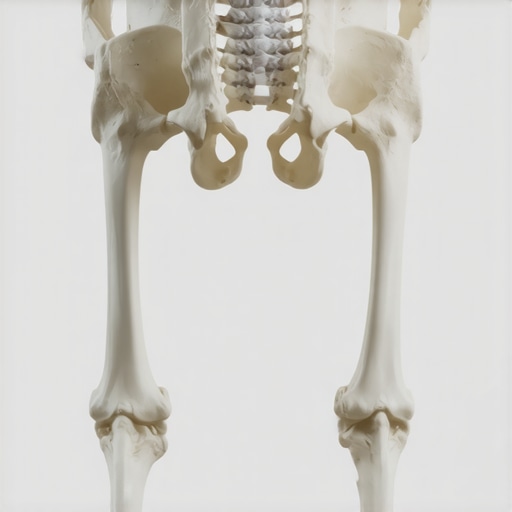
The sacroiliac joint, or SI joint, is a stubborn little piece of anatomy. It’s meant to transfer weight between your upper body and legs, but it doesn’t actually like to move all that much. When we force it into extreme ranges of motion during a flow, we’re often straining the very stability we need to stay upright. I made the classic mistake of chasing flexibility while completely ignoring my glute medius strength, which is like trying to build a skyscraper on a foundation of Jell-O. Today, I’m going to show you how to spot the red flags in your routine before you end up on the floor like I did. We’re going to fix the way you move so you can finally boost your mobility without the literal headache in your hips.
Is this yoga thing even worth the hype if it hurts?
It’s a fair question. Why keep doing something that leaves you feeling stiff after standing for ten minutes? The truth is, yoga isn’t the enemy, but our ego often is. We push into poses like Warrior II or Triangle without realizing our pelvis is tilted in a way that sheer force is hitting the SI joint. According to research published in the Journal of Orthopaedic & Sports Physical Therapy, SI joint dysfunction can account for up to 30% of all lower back pain cases, yet it’s often misdiagnosed as a simple disc issue. Have you ever felt that weird, one-sided ache after a class and just assumed you ‘worked hard’? Tell me in the comments, because you might be surprised how common it is. If you’ve been chasing hamstring stretches to fix it, you’re likely making it worse. Let’s look at why your current flow is failing you.
Turn Your Glutes into Your Body’s Natural Shock Absorbers
Think of your SI joint like the suspension system in a high-end mountain bike. If the shocks (your muscles) are blown, every bump in the road hits the frame directly. Most of us go into a yoga class with our ‘shocks’ completely turned off. When you’re in a pose like Crescent Lunge, your front hip shouldn’t just be hanging out; it needs to be actively pulling into the socket. I started treating my glutes like the primary guardians of my spine. Instead of just sinking into the stretch, I learned that why your glute medius is more important than your abs for back health becomes obvious the moment you try to balance. You have to squeeze the side of your hip as if you’re trying to crush a walnut between your leg and your pelvis. This creates a ‘hug’ around the SI joint, preventing that grinding sensation that leads to long-term inflammation.
Stop Chasing Depth and Start Finding Stability
We’ve been conditioned to think that ‘deeper is better,’ but for someone with SI joint instability, a deep stretch is often a slow-motion injury. If your lower back arches excessively—what I call ‘duck butt’—you are shearing the joint. You need to master the the pelvic tilt trick for instant lumbar relief. By tucking your tailbone just a fraction of an inch, you engage the lower core and take the pressure off the base of your spine. It feels less like a ‘big’ yoga move and more like a subtle internal shift, but that’s where the healing happens. If you’re already in significant pain, don’t just push through; try the hip bridge modification for severe lower back sensitivity to wake up those muscles without the weight-bearing stress.
My ‘Aha’ Moment on a Yoga Mat
I remember trying to power through a Sun Salutation about three months after my initial back ‘scream.’ I felt that familiar, sharp twinge in my right hip during a simple forward fold. Usually, I would have just breathed through it, but this time I stopped. I backed out of the fold by two inches, engaged my core, and swapped my usual routine for the dead bug variation that actually fixes lower back instability right there on the mat. The result? The sharp pain didn’t just lessen; it vanished. I realized I didn’t need more flexibility; I needed to teach my nervous system how to hold me together. This is where professional intervention becomes a game-changer. Sometimes the joint is so ‘stuck’ in a bad pattern that you can’t just exercise your way out of it. Seeing a specialist to restore your range how chiropractic care enhances movement can reset the joint’s position so your exercises actually work. When you enhance mobility naturally with chiropractic care, you’re not just masking the pain; you’re clearing the path for these movements to be effective rather than destructive. Stop trying to stretch a joint that is already screaming for stability. Focus on the squeeze, the tilt, and the strength.It’s a pattern I see every day: someone comes in with a neck that feels like a rusted hinge, and their first instinct is to pull, tug, and stretch it into submission. But here is the contrarian truth that most wellness gurus miss: your neck is likely tight because it’s trying to save you from a lack of stability elsewhere. When you constantly stretch those tight upper traps, you’re often just weakening a muscle that’s already over-lengthened and screaming for help. This is the ultimate oops factor. You think you’re releasing tension, but you’re actually stripping away the last line of defense your cervical spine has against gravity.
Can your stiff ankles really be the reason your neck feels like it’s in a vise?
Most people think the body is a collection of separate parts, but it’s actually one continuous kinetic chain. I’ve had patients find relief from chronic migraines not by rubbing their temples, but by addressing their foundations. It sounds wild, but why we look at your feet to solve your neck issues is grounded in the way your gait forces your head to compensate for every step. If your arches collapse, your pelvis tilts, your mid-back rounds, and suddenly your neck has to work ten times harder just to keep your eyes level with the horizon. This is the hidden link between neck pain and spinal health that most people ignore until they’re in a crisis. A study in the Journal of Manual & Manipulative Therapy found that treating the thoracic spine—your mid-back—can significantly reduce neck pain intensity. This is because your neck doesn’t live in a vacuum; it relies on the mobility of the segments below it. When that mid-back gets stiff from staring at a screen, your neck has to over-mobilize to make up for it. Instead of just rubbing the spot that hurts, you need to learn why we adjust your mid-back to help your lower back recover and how that same principle applies to your cervical spine. If you’ve been stuck in a cycle of stretch, feel better for ten minutes, then seize up again, you are likely dealing with an instability issue. Have you ever fallen into this trap? Let me know in the comments. You might need to stop the stretching and start learning how to strengthen your deep neck flexors to provide the internal scaffolding your spine is begging for. If the pain is already radiating, don’t panic, but do look for the 30-second fix for a pinched nerve in the neck to calm the system down before you start your stability work. True mobility mastery isn’t about being a pretzel; it’s about being a bridge—strong, stable, and able to handle the load.
Maintaining a spine that doesn’t feel like a bag of gravel requires more than just a weekly yoga class; it demands the right gear and a shift in how you treat your desk hours. I’ve found that the real magic happens in the ‘micro-adjustments’ of daily life. For instance, I never travel without my ‘peanut’—two lacrosse balls taped together. It’s the only thing that gets deep enough to relieve neck back discomfort using these expert methods. While many people swear by expensive massage guns, they often just vibrate the surface. If you really want to target the source, you need static pressure on the facets of the vertebrae. My mentor once told me that if you aren’t doing your morning spinal hygiene routine, you’re essentially just waiting for the next flare-up.
Why Two Lacrosse Balls Are Better Than a Hundred-Dollar Massage Gun
The peanut tool works because it respects the anatomy of your spine. By cradling the spinous processes in the gap between the balls, you can apply pressure directly to the paraspinal muscles without bruising the bone. I use this against a wall for three minutes every evening to ensure I restore your back mobility with proven chiropractic strategies. If you’ve been struggling with that ‘burning’ sensation between your blades, this is your secret weapon. I’m also obsessed with the 20-20-20 rule, but with a specific twist for the cervical spine. Every 20 minutes, I perform the brueggers relief move to reverse hours of hunched sitting. It takes ten seconds but resets the neurological ‘creep’ that happens when your ligaments start to stretch under the weight of your head.
The Future of Posture is Already Hiding in Your Pocket
Looking forward, I predict we’re going to see a massive shift toward wearable biofeedback and AI-integrated workspaces. Devices like the ‘Upright Go’ are just the beginning; soon, our smart glasses will use data on how your vision impacts your neck position to dim the screen or nudge us if we start to crane forward. This technology will turn our devices from the cause of our pain into the cure. Until then, you have to be your own biofeedback loop. Use your phone to set reminders to boost your back health with simple yet effective chiropractic hacks every few hours.
How can I stay mobile without making it a full-time job?
It’s about habit stacking. I do the pelvic tilt secret for effortless posture while walking while I’m brewing my morning coffee. I use the chin tuck drill to combat tech neck instantly whenever I’m waiting for a red light in the car. This isn’t just about ‘feeling good’ in the moment; it’s about long-term mobility mastery. Dr. Stuart McGill, a world-renowned expert in spine biomechanics, emphasizes that ‘spine hygiene’ is the foundation of all recovery. You wouldn’t stop brushing your teeth just because you don’t have a cavity today, right? The same logic applies to your discs. If you’ve reached a plateau, it’s time to restore your range how chiropractic care enhances movement with professional help. Try this today: set a timer for 45 minutes and, when it goes off, perform three slow cat cow variations for targeted mid-back relief. Your future self will thank you for the consistency.
The Hardest Lessons My Spine Ever Taught Me
Looking back at my journey from a ‘yoga-injured’ mess to someone who actually understands biomechanics, a few lightbulb moments stand out. First, I realized that my obsession with ‘opening up’ was actually tearing me down. I had to accept that stability is the silent partner of mobility. Without it, you’re just stretching your ligaments until they give up. Second, I learned that local pain is often a global problem. My neck issues weren’t just about my desk; they were deeply tied to how my feet hit the floor and how my mid-back moved. Finally, I stopped seeing my body as a machine that needed fixing and started seeing it as a system that needed better communication. This shift in mindset is what leads to true mobility mastery.
My Daily Survival Kit
I don’t believe in fancy gadgets that collect dust in the corner. My toolkit is lean and functional. I always keep a pair of lacrosse balls nearby; they are indispensable to relieve neck back discomfort using these expert methods. I also highly recommend digging into the works of Dr. Stuart McGill, specifically ‘The Back Mechanic.’ It changed how I view spinal loads. #IMAGE_PLACEHOLDER_E# For my digital workspace, I use simple break timers that force me to stand up and reset my posture every hour. And most importantly, I have a trusted chiropractor on speed dial. When the patterns get too deep to break alone, I need someone to restore your range how chiropractic care enhances movement through professional adjustments. These aren’t just luxuries; they are essential for anyone serious about back pain recovery how chiropractic care transforms lives.
Ready for a Fresh Start?
If you’re currently in the thick of it, feeling like every move is a gamble, please know that it doesn’t have to stay this way. You are not ‘broken’ or ‘old’; you might just be moving in a way that doesn’t respect your unique anatomy. By shifting your focus from mindless stretching to intentional stability and seeking help to boost mobility and ease pain, you can reclaim the freedom of movement you thought was gone. Your spine is incredibly resilient when you give it the right support. Don’t wait for the next ‘scream’ from your back to start making these changes. Start with one pelvic tilt, one chin tuck, or one deep breath today.
Which of these movement habits do you find the hardest to stick with during a busy workday? Let me know in the comments below!