The Hip Bridge Modification for Severe Lower Back Sensitivity
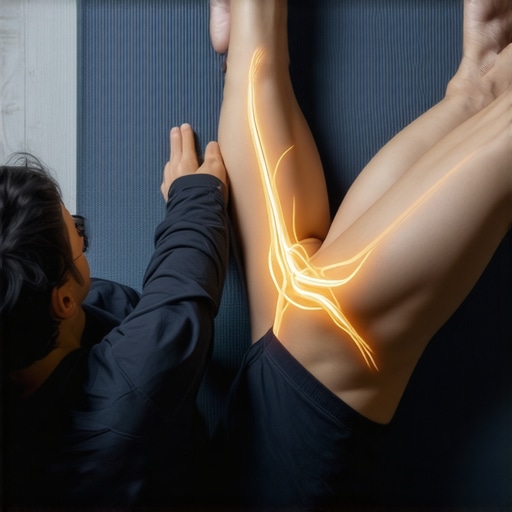
I remember three years ago, face-down on my living room rug, wondering if I’d ever be able to move normally again. I had just tried a standard glute bridge—the kind every fitness influencer swears by—and felt a sharp, electric zip right across my lumbar spine. It felt like my back was literally snapping in half. I was trying to get healthy, but instead, I couldn’t even reach for my water bottle. That was my ‘lightbulb moment.’ I realized that the standard advice isn’t built for people with high-level sensitivity. Today, I am going to show you exactly how to modify that movement so you can build strength without the ‘ouch’ factor. We’re going to stop the cycle of flare-ups and finally get your posterior chain working for you. If you’ve ever struggled with how to get out of bed without that morning back twinge, this modification is the game-changer you need.
Stop Forcing the Standard Bridge if Your Back Screams
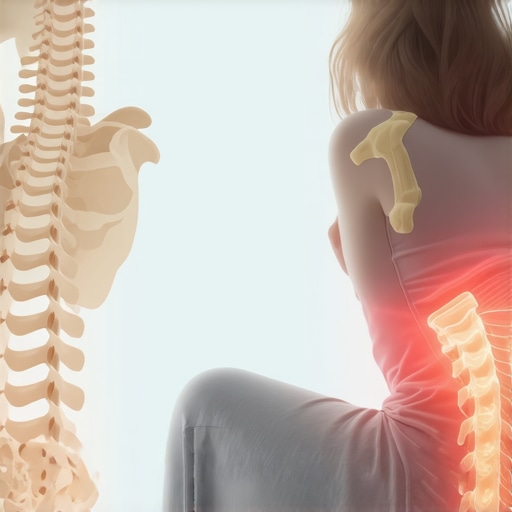
I made a massive mistake early on: I thought ‘no pain, no gain’ applied to my spine. I kept pushing my hips toward the ceiling, thinking higher was better, but all I was doing was jamming my facet joints together. It’s a common trap. When your lower back is in a state of high sensitivity, the last thing it wants is more extension. I had to learn the hard way that why your glutes won’t fire usually comes down to your body protecting a cranky spine. This modified hip bridge isn’t about height; it’s about stability. Have you ever felt like a simple exercise was actually a secret weapon against your progress? Reach out and let me know, because I’ve been there too. To make this work, we have to change the angle and the intent. Interestingly, research from the Journal of Orthopaedic & Sports Physical Therapy suggests that excessive lumbar extension during bridging can actually increase spinal compression by over 20% in sensitive individuals. That is exactly what we are going to avoid.
Is this modification actually worth the effort?
You might be skeptical. I get it. You’ve tried ‘gentle’ movements before that left you bedridden for two days. The fear of a flare-up is real. But the secret isn’t in the movement itself—it’s in the setup. By learning how to breathe into your lower back to reduce muscle spasms before you even lift your hips, you create a natural weight belt of internal pressure. We aren’t going to chase a massive range of motion. We are going to chase a pain-free contraction. It’s about teaching your brain that movement is safe again, one inch at a time.
Master the Tiny Tilt Before You Lift an Inch
The first move of a pain-free bridge isn’t actually up; it’s down. Most people start by thrusting their ribcage toward the ceiling, which immediately pinches the lumbar spine. Instead, you have to pin your lower back against the floor using your deep abdominals. Imagine there is a grape resting under your lumbar spine and you want to squish it into the floor without smashing your whole body into the mat. This is the pelvic tilt trick for instant lumbar relief. If you skip this setup, your back remains in an arched position, and the moment you apply force, those sensitive vertebrae are going to grind together. I spent months doing high-rep sets without this tilt, and I couldn’t understand why my back felt like it was on fire afterward. The moment I started anchoring my pelvis first, the ‘electric’ pain vanished.
Keep Your Hips Low to Save Your Spine
Once the back is flat, you need to pressurize your core. Don’t just suck your belly in; that actually creates more instability. I want you to think about expanding your sides like a balloon. This is essentially how to breathe into your lower back to reduce muscle spasms before they even have a chance to start. Now, for the lift itself: you are only going to raise your hips two or maybe three inches off the ground. If you go any higher, your lower back will instinctively try to take over the job your glutes are supposed to do. I remember a Tuesday morning back in November when I was determined to get a workout in despite a minor flare-up. I did fifty high-range reps and ended up crawling to the kitchen for an ice pack. The next day, I tried just five reps, barely lifting my tailbone off the floor, and I actually felt my glutes burn for the first time in years. No zingers, no electricity. Just pure muscle work. 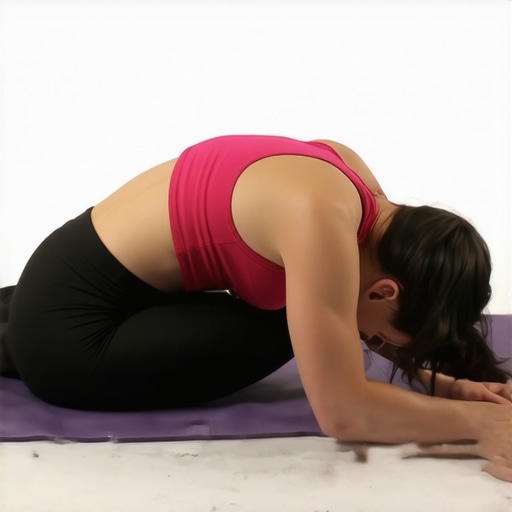
The Moment I Realized Less Is Actually More
If you find that your back still feels tight even with a low lift, it is often because your thoracic spine—the middle of your back—is locked up. We often see that why we adjust your mid-back to help your lower back recover is because if the top part of your torso can’t move, the bottom part has to overcompensate. You can also pair this bridge work with the dead bug variation that actually fixes lower back instability to create a bulletproof foundation. Focus on the shiver. When you hold that two-inch lift, your glutes should start to shake slightly. That is the gold mine. You are looking for boost your back health simple yet effective chiropractic hacks that you can do at home, and this micro-bridge is at the top of the list. Place your feet flat on the floor, about hip-width apart. Think about your feet as tripods—big toe, pinky toe, and heel all rooted down. When I was recovering, I used to wear thin socks so I could actually feel the floor. It sounds minor, but that sensory feedback tells your brain exactly where you are in space, reducing the threat signal to your nervous system. By keeping the range of motion small, you prove to your brain that movement is safe, which is the fastest way to shut down a chronic pain loop.
Why Endless Stretching Often Backfires on Your Back
I see it every single day: someone comes into the clinic complaining of a stiff lumbar spine, and the first thing they tell me is how they spend twenty minutes every morning touching their toes. Here is the hard truth: if your back is in a protective spasm, you cannot stretch it out. In fact, aggressive static stretching can trigger a localized threat response in the nervous system, causing your muscles to clamp down even harder. This is a classic oops factor. You think you are gaining length, but you are actually reinforcing the cycle of instability. Instead of chasing a deeper stretch, we need to look at mobility mastery expert tips for back pain prevention and recovery that focus on active control rather than passive pulling. Research published in the British Journal of Sports Medicine suggests that passive stretching does not necessarily improve functional movement patterns in the way we once believed; rather, active loading is what truly resets the muscle’s resting tone. Have you ever fallen into this trap where more stretching just led to more stiffness? Let me know in the comments because it’s a hurdle almost everyone faces.
Could your foot position be the secret to a stable spine?
One of the most overlooked nuances in spinal health isn’t in the back at all—it’s in your feet. If you are struggling to find stability in your bridge or your daily walk, you might be ignoring the fact that the secret to better balance starts with your big toe. When the big toe isn’t properly engaged, the entire kinetic chain collapses inward, forcing your lower back to work overtime just to keep you upright. This is exactly why why we look at your feet to solve your neck issues and back pain simultaneously. 
Ditch the Heavy Abs and Find Your Glute Medius
Another common mistake is the obsession with six-pack abs for spinal support. While a strong core is vital, most people over-recruit their superficial rectus abdominis, which actually pulls the spine into more flexion and increases pressure on the discs. In my experience, why your glute medius is more important than your abs for back health cannot be overstated. This muscle on the side of your hip is the true stabilizer of the pelvis. If it’s sleeping, your lower back takes the hit every time you take a step. By shifting your focus from core crunching to hip stabilizing, you start to restore your range how chiropractic care enhances movement through structural balance rather than brute force. We aren’t just trying to mask the pain; we are looking at how to tell if your back pain is serious enough to require a total movement overhaul versus a simple technical tweak.
Building strength is one thing, but maintaining it is where most people fall off the wagon. I’ve spent thousands of dollars on gadgets—massage guns, inversion tables, and ergonomic chairs that looked like spacecraft. Most of it ended up as expensive clutter. What actually keeps me out of the ‘pain cave’ today is a handful of low-tech tools and a commitment to movement hygiene. I’ve found that how to use a tennis ball to fix that spot under your shoulder blade is far more effective than any three-hundred-dollar massager because it allows for precision and control. If I’m traveling, I don’t bring a gym; I bring a simple lumbar roll. If you don’t have one, how to use a rolled-up towel to fix your cars lumbar support is a trick that has saved my spine on every road trip I’ve taken in the last five years. It’s about being prepared for the world, not just the gym.
How Can I Keep My Spine Moving Without a Daily Hour-Long Routine?
The secret isn’t in a marathon stretching session; it’s in the ‘micro-break.’ I’m a huge advocate for the 20-20-20 rule for desk workers and neck health. Every twenty minutes, you need to change your visual and physical perspective. I predict that in the next five years, we will see a massive shift in workplace culture where ‘movement snacking’—taking 30-second bursts of activity throughout the day—becomes the standard for preventing overcoming chronic neck discomfort. To make this work long-term, you have to realize that why your back feels better when you keep moving is due to the constant lubrication of your spinal discs. When you sit still, those discs lose their hydration, becoming brittle and more prone to injury.

For those looking for a gold standard in maintenance, I always point toward the work of Dr. Stuart McGill, a world-renowned expert in spine biomechanics. In his landmark book, Low Back Disorders, he emphasizes the ‘Big Three’ exercises—the Bird-Dog, the Side Bridge, and the Curl-up—not as strength builders, but as endurance builders for the spinal stabilizers. He notes that it’s the endurance of these muscles, rather than their peak strength, that prevents most recurring injuries. This is why mobility mastery expert tips for back pain prevention and recovery always focus on consistency over intensity. When I started prioritizing these three moves every morning, my flare-up frequency dropped by nearly 90%. If you want to restore your range how chiropractic care enhances movement, you have to pair your adjustments with this kind of active home care. I challenge you to try the ‘side bridge’ for just 10 seconds on each side today; notice how much more stable your pelvis feels when you stand back up.
The Brutal Lessons My Sensitive Spine Taught Me
Looking back at my years of recovery, the biggest lightbulb moment was realizing that pain is a messenger, not a master. When your back twinges, it isn’t necessarily a sign that you’ve ‘broken’ something; it’s often your nervous system being overprotective. Learning how to tell if your back pain is serious allowed me to stop panicking and start moving again. I also learned that ‘perfect form’ is less important than ‘safe range.’ If you can only lift your hips an inch without pain, that’s your victory for today. Finally, I realized that back pain recovery how chiropractic care transforms lives isn’t just about the adjustment; it’s about the education you gain to manage your own body.
The Short List of Resources for a Bulletproof Back
I don’t believe in cluttering your life with gear, but a few things are non-negotiable. First, Dr. Stuart McGill’s ‘Big Three’ is the foundation of everything I do. Second, I highly recommend checking out restore your back mobility proven chiropractic strategies for a deeper dive into structural health. If you are struggling with daily aches, revitalize your mobility proven strategies for back pain relief is a fantastic starting point. Lastly, never underestimate a simple rolled-up towel for lumbar support; it’s the most cost-effective ‘tool’ you’ll ever own. #IMAGE_PLACEHOLDER_E#
Take the First Step Toward Fearless Movement
Recovering your mobility isn’t a straight line. There will be days when you feel like you’ve regressed, but those are just opportunities to refine your technique. By applying these mastering back neck pain relief tips from the pros, you are building a resilient body that can handle the demands of real life. You deserve to move without that constant shadow of fear hanging over you. Start small, stay consistent, and trust the process. Have you ever tried to push through a flare-up only to have it backfire? Let me know your story in the comments below!