Why Adjusting Your Hips Can Stop Your Recurring Headaches
I used to wake up feeling like a tiny construction crew was jackhammering the base of my skull. Every afternoon, without fail, the tension would creep up my neck and settle right behind my eyes. I tried everything. I bought the fancy pillows, quit caffeine, and even repositioned my monitor a dozen times. Nothing worked. It wasn’t until I ‘threw my hip out’ that I realized the source of my misery was miles away from my head. When my pelvis was finally leveled, the fog lifted. It felt like magic, but it was really just the kinetic chain doing its job.
Your Pelvis is the Foundation for Your Skull
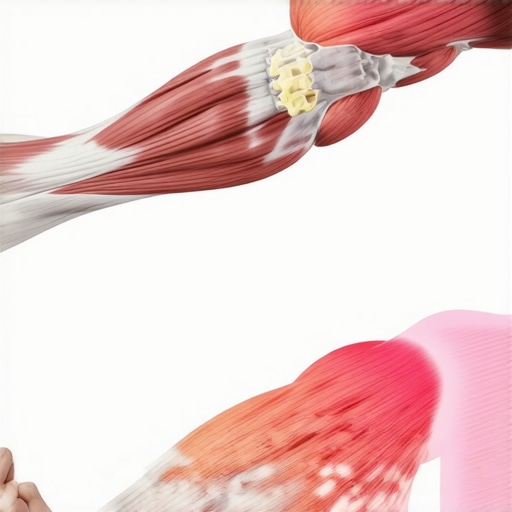
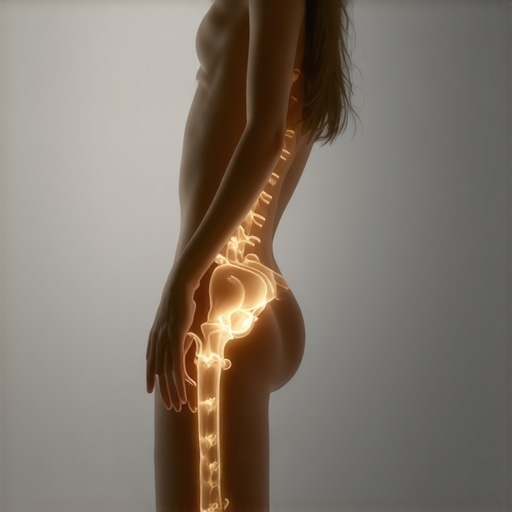
For years, I made the classic rookie mistake of chasing the pain. If my head hurt, I massaged my temples. If my neck was stiff, I bought a new pillow. I was treating the smoke and ignoring the fire. Think of your spine like a skyscraper. If the foundation—your hips and pelvis—is tilted even a fraction of an inch, every floor above it has to lean to compensate. By the time that lean reaches the ‘penthouse’ (your head), the muscles in your neck are working overtime just to keep your eyes level with the horizon. This constant tug-of-war is what triggers those relentless tension headaches. According to research published in the Journal of Physical Therapy Science, pelvic misalignment can significantly alter the curvature of the cervical spine, leading to chronic muscle strain. Have you ever noticed that your headaches get worse after a day of heavy walking or after a long run?
Does my hip really affect my forehead?
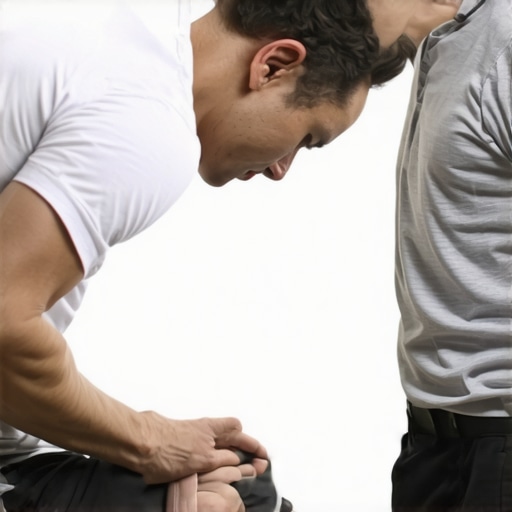
I get the skepticism. It sounds like a reach. But when I look back at my own journey, the signs were everywhere. My pants always hemmed slightly differently on one side. I had a weird habit of sitting cross-legged because it was the only way I felt ‘balanced.’ We often look at your feet and hips because the body is one continuous unit. Today, I am going to show you how a simple shift in your pelvic alignment can do more for your head than a whole bottle of aspirin. We are moving past the surface level and getting to the literal root of the problem. Tell me, do you feel like your body is slightly ‘twisted’ when you stand in front of a mirror?First, you need to see the distortion for yourself before you can fix it. Stand in front of a full-length mirror. Close your eyes, march in place for five seconds, and stop. Open your eyes. Is one shoulder higher? Is your belt line slanted? If your hips are unlevel, your spine has to ‘snake’ its way up to keep your head level. You can even learn how to balance on one leg to check your spine for deeper hidden imbalances that indicate your foundation is shifting under your feet.
Identify the Structural Slant
The One-Legged Truth Test
To understand the ‘how,’ imagine a crane operator. If the base of the crane is on a 5-degree slope, the arm of the crane has to swing with massive tension just to keep the load from crashing. Your neck is that crane arm. When your pelvis is tilted, it forces the cervical muscles to contract 24/7. This is often how to tell if your headache is starting in your neck rather than your brain; the pain usually radiates from the base of the skull upward because the muscles are simply exhausted. I remember one Tuesday I was trying to write a report, and the pain was so sharp I couldn’t see straight. I kept stretching my neck, but the relief lasted seconds. Finally, I stood up and realized I had been leaning entirely on my left hip for four hours. My pelvis was hiked up like a half-drawn bridge. I performed a quick alignment check, and the headache vanished in ten minutes.
Master the Pelvic Tilt Secret
Waking Up the Muscles That Save Your Neck
The most effective way to neutralize this strain is by utilizing the pelvic tilt trick for instant lumbar relief, which resets the lumbar curve and takes the pressure off the upper spine. Lie on your back with your knees bent. Instead of just flattening your back, imagine pulling your belly button toward your chin using only your lower abs. This subtle rotation levels the ‘bowl’ of your pelvis. 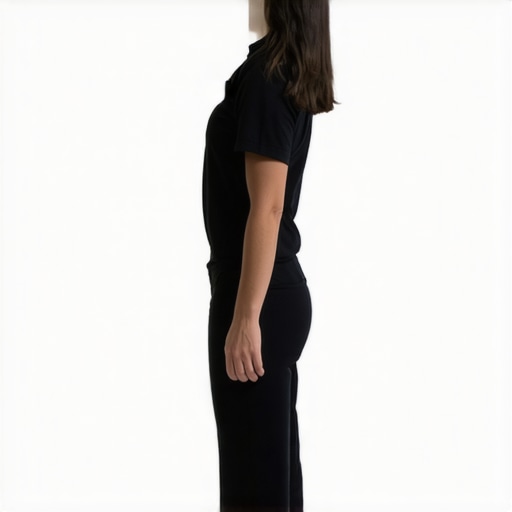 If you master the pelvic tilt secret for effortless posture while walking, you effectively stop the ‘neck-snap’ that happens every time your heel hits the pavement.
Build a Stronger Support System
Once the pelvis is level, you have to keep it there. This is why your glute medius is more important than your abs for back health and neck comfort. These lateral hip muscles act as the ‘guy-wires’ for your tower. If they are weak, your pelvis will drop every time you take a step, causing a ripple effect of tension all the way to your forehead. To ensure you stay aligned from the moment you wake up, I recommend integrating the 3-step morning routine for hip mobility into your day. This prevents the initial stiffness that leads to the afternoon headache cycle.Most people assume that if a muscle feels tight, it needs to be stretched into oblivion. This is the biggest ‘trap’ in mobility and the reason why many people never actually find relief. In my experience, a ‘tight’ muscle is often a muscle that is ‘locked long’—it is screaming for stability, not more length. When your brain senses that your spine is unstable or that your foundation is shifting, it clamps down on the surrounding musculature to protect the spinal cord. If you keep stretching those ‘tight’ traps, you are essentially pulling the emergency brake off a car parked on a hill. Instead, we use specific chiropractic techniques unveiled through years of clinical practice to show the body it is safe to let go. 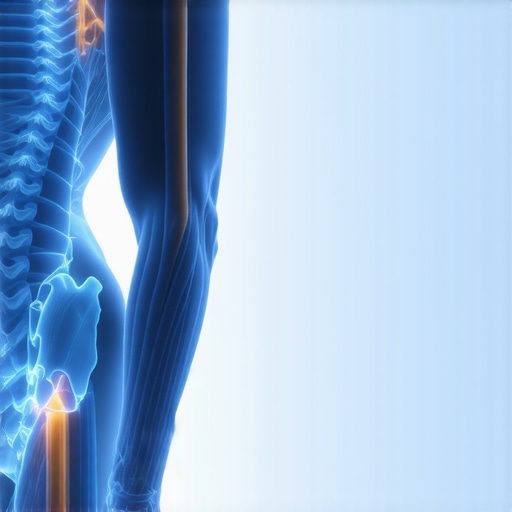
Stop Pulling on Your Stiff Neck
Another common ‘oops’ factor is the ice-pack obsession. While it feels good initially, why icing isn’t always the best move for a stiff neck comes down to blood flow; you need circulation to flush out the metabolic waste and inflammatory markers that are making those muscles ache in the first place. If you are constantly icing without integrating movement, you are just freezing the problem in place. We focus on active recovery because flexibility without control is just a recipe for a joint injury. This is the nuance: you do not just want a neck that can turn; you want a neck that knows how to turn without triggering a protective spasm.
Why Does My Neck Still Crunch and Pop?
I hear this from patients all the time: ‘I had an adjustment, but it still sounds like gravel in there.’ Understanding why your neck crunches when you turn your head is about recognizing the difference between a bone being misaligned and a ligament that is slightly lax due to chronic strain. As noted in the Journal of Bodywork and Movement Therapies, localized muscle stiffness is often a protective ‘splinting’ mechanism rather than a true shortening of the fiber. To fix it, you often need to look at the connection between your jaw tension and your top neck bone. If your jaw is locked, your C1 vertebra will never stay happy, no matter how much you stretch your neck.
The Internal Anchor You Are Probably Ignoring
If you have fixed your posture and your hips but the headaches still linger, it is time to look at the ‘bottom of the bottom.’ This is why your pelvic floor matters for spinal stability more than you think. It is the literal basement of your core. If those deep muscles are dysfunctional, your mid-back has nothing to sit on, forcing your neck to become the primary stabilizer for your entire torso. You can try the 30-second fix for a pinched nerve in the neck to find temporary relief, but long-term success requires you to learn how to strengthen your deep neck flexors while simultaneously addressing that pelvic anchor. Have you ever fallen into this trap of stretching a muscle until it actually felt worse? Let me know in the comments.
If you want to keep the gains you have made, you have to stop treating your body like a project you can ‘finish.’ It is more like a vintage car that needs a weekly tune-up rather than a one-time repair. I personally swear by a standard lacrosse ball; it is firmer than a tennis ball and gets deeper into the fascia. While you can learn how to use a tennis ball to fix that spot under your shoulder blade, I find the extra density of the lacrosse ball is what really breaks up the adhesions in the upper traps that lead to those tension headaches.
Gear That Actually Earns Its Keep
Beyond physical tools, I am a huge advocate for ‘Spinal Hygiene,’ a concept popularized by Dr. Stuart McGill, a world-renowned expert in spine biomechanics at the University of Waterloo. He emphasizes that it is not just the big workouts that matter, but the way you brush your teeth, tie your shoes, and move through the world. This is exactly why your back feels better when you keep moving; micro-movements prevent the intervertebral discs from becoming stagnant and dehydrated.
How do I stay aligned when I am busy?
The secret isn’t a 90-minute yoga session; it is the ‘Interrupt.’ I use a simple haptic timer on my watch that vibrates every 20 minutes. It reminds me to perform the 20-20-20 rule for desk workers and neck health, but I add a specific twist: I do one single pelvic tilt. It is a literal five-second reset. If I am at my desk for eight hours, that is 24 mini-adjustments. This prevents the cumulative load that usually leads to a Friday afternoon flare-up.
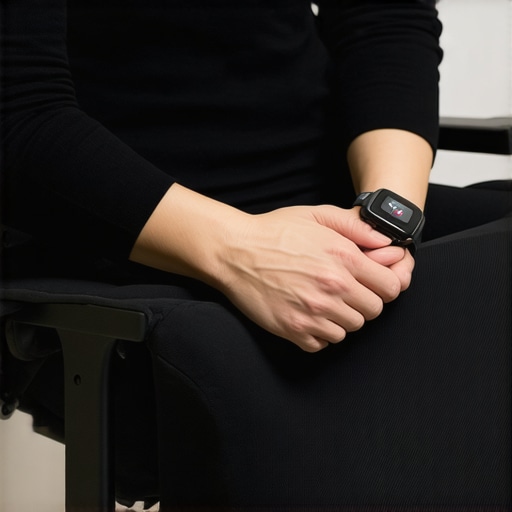
I also suggest keeping a firm lumbar roll in your car. Most car seats are designed for ‘safety’—which often curves you into a C-shape—rather than spinal health. Using a roll helps you restore your back mobility with proven chiropractic strategies even while you are stuck in traffic. Looking ahead, I suspect we are moving toward ‘Bio-Feedback Wearables.’ We already have watches that track heart rate, but soon we will have smart clothing with embedded sensors that vibrate the moment your shoulder blades drift apart or your pelvis loses its neutral tilt. It will take the guesswork out of maintenance.
The Future of Feeling Good
For now, here is my advanced challenge for you: tonight, before you go to bed, spend exactly five minutes on the floor. Use the 5-minute reset for a stiff lumbar spine and focus entirely on your breathing. If you can master the floor reset, you will stop the damage before it even starts tomorrow morning.
The Gravity Debt I Stopped Paying Every Afternoon
Looking back on my years of chronic stiffness, I realized I was fighting a war I couldn’t win by only attacking the symptoms. Here are the shifts that changed everything for me:
- Stability before flexibility: I stopped trying to force my muscles to ‘relax’ and started showing my body it was stable. When your pelvis is level, your brain naturally lets go of the tension in your neck because it no longer feels like your head is going to fall off.
- The ‘Locked Long’ Trap: I finally understood that my tight traps weren’t actually short; they were overstretched and exhausted from holding my slanted spine upright. Strengthening the base is how to enhance mobility naturally with chiropractic care without constantly pulling on sensitive nerves.
- Micro-wins over mega-sessions: A five-minute floor reset beats a two-hour gym session if the gym session is built on a crooked foundation.
The Gear That Keeps My Spine From Folding
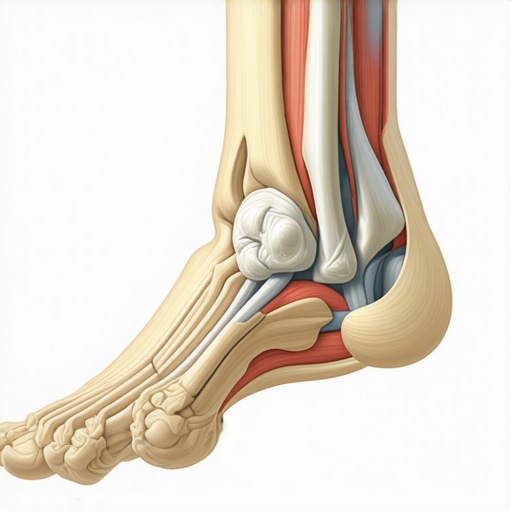
I don’t believe in buying every gadget on the market, but these few items are non-negotiable for my daily maintenance. First, Back Mechanic by Dr. Stuart McGill is the ‘owner’s manual’ for the human spine that we should have all received at birth. It teaches you simple yet effective chiropractic hacks for daily movement. I also swear by a high-density lacrosse ball for localized release; it’s the most cost-effective way to master back and neck pain relief from your own living room. Finally, I moved toward footwear with a wider toe box, because I learned that looking at your feet to solve your neck issues is the only way to ensure your foundation is actually level when you walk.
Your Body is Not Your Enemy
It can feel like your spine is betraying you, but the pain is really just a sophisticated alarm system trying to get your attention. Once you stop chasing the ache in your forehead and start supporting the foundation in your hips, you’ll find that back pain and neck tension don’t have to be your permanent roommates. You have the tools now to restore your back mobility and finally live without that construction crew in your skull. Have you ever noticed that your neck feels tighter on days when your lower back is acting up? Let me know in the comments below!