The Best Stretches for People Who Sit Cross-Legged All Day
I remember the day I tried to stand up from my office chair—well, it wasn’t really a chair, it was a meditation cushion I’d swapped in because I thought I was being “zen”—and my right leg simply didn’t work. I had been sitting in my favorite cross-legged position for three hours straight, deep in a flow state. When I finally moved, my hip joint felt like it had been welded shut, and a sharp, electric zing shot down my thigh. I wasn’t zen; I was a human pretzel who had reached his breaking point. If you’re reading this while tucked into a tight ball in your swivel chair, we need to talk. I’ve spent years “desk-jockeying” while folded up like a piece of origami. It felt comfortable at the time, but the reality is that sitting cross-legged forces your pelvis into a specific tilt that wreaks havoc on your lower back and hip flexors. My biggest mistake was assuming that because I was flexible enough to get into the position, it was “good” for me. Spoiler alert: it wasn’t. It led to a chronic situation where I wondered why your tailbone hurts after sitting for 10 minutes, only to realize I was overstretching some muscles while letting others atrophy into uselessness. Today, I’m going to share the exact routine that saved my range of motion. We aren’t just going to “stretch”; we are going to learn how to boost mobility and ease pain using techniques that actually stick. Have you ever felt that weird, dull ache in your lower back that just won’t go away no matter how you shift your weight? If so, you’re in the right place.
Why Your Hips Feel Like They Are Rusting Shut
The problem is that our brains are very good at ignoring discomfort when we are focused. I’d be three hours into a project, my knees tucked under my chin, completely oblivious to the fact that I was basically cutting off blood flow and over-shortening my hip flexors. By the time I’d untangle myself, the damage was done. I tried to fix it with those generic gym stretches—you know the ones—but they never hit the right spot. It wasn’t until I started focusing on the deep stabilizers that things changed. If you’ve ever felt like your hips were “snapping” every time you walked, you know exactly what I mean. Have you ever wondered why your body feels eighty years old the second you try to stand up? It’s likely because you haven’t figured out how to stay mobile when you have a desk job and no time for the gym. I’ve been through the ringer with this, and I promise that five minutes of targeted movement is worth more than an hour of random yoga poses.
Is this really any different than normal sitting?
You might be thinking that sitting is just sitting, regardless of where your feet are. However, asymmetrical sitting puts uneven pressure on your sacroiliac (SI) joints and can even lead to pelvic torsion. According to a study published by the Journal of Physical Therapy Science, prolonged asymmetrical sitting significantly increases the risk of lower back pain by altering the muscle activation patterns of the trunk. This is especially true if you already have a setup where your SI joint hates your soft mattress or your unsupportive sofa. I’m going to show you how to implement the 3-step morning routine for hip mobility that I wish I had known five years ago. It’s about more than just feeling “loose”; it’s about making sure your spine doesn’t pay the price for your comfort habits. Have you ever had that terrifying moment where your leg goes completely dead after a long Zoom call? Tell me in the comments, because I felt like I was the only one for years.
Stop the Springs from Snapping with a Safe Exit Strategy
Before you even think about standing up, you need to ‘thaw’ your joints. If you’ve been sitting cross-legged, your hip flexors are effectively locked in a shortened state. Jumping straight into a standing position is a recipe for a lumbar flare-up. I once tried to bolt upright to answer the door after three hours of ‘pretzel sitting,’ and my lower back seized so hard I had to crawl the rest of the way to the hallway. It was a humiliating wake-up call. Now, I follow a specific sequence: I uncross my legs, place both feet flat on the floor, and perform a few seated pelvic tilts. This small movement helps restore your back mobility proven chiropractic strategies by reintroducing fluid to the spinal discs before they take on the full weight of your torso.
Why Your Glutes Won’t Fire and How to Fix It
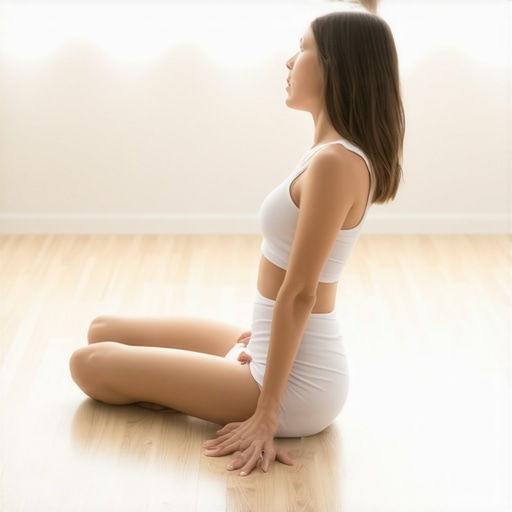
The biggest casualty of the cross-legged habit isn’t actually your back—it’s your backside. When your legs are crossed, your glutes are in a stretched, inactive position for hours. Over time, they simply ‘forget’ how to engage. This is why why your glutes wont fire and how to fix it becomes a critical topic for anyone with a desk job. To fix this, I started incorporating ‘glute squeezes’ every thirty minutes while at my desk. It sounds silly, but it’s like jump-starting a dead car battery. If those muscles aren’t working, your lower back has to do double the work to keep you upright, which is why many boost mobility and ease pain efforts often fail if they only focus on stretching without activation.
Reverse Sitting Damage with the 90/90 Drill
If you want to move from ‘rusted shut’ to ‘fluid,’ you need a move that targets the deep rotation of the hip. The 90/90 stretch was a total game-changer for my recovery. You sit on the floor with one leg bent at 90 degrees in front of you and the other at 90 degrees to the side. Most people realize very quickly how much range they’ve lost here. I used to look like a leaning tower of Pisa trying to sit upright in this position because my hips were so tight. By spending just two minutes in this pose, you can restore your range how chiropractic care enhances movement by forcing the femur to sit properly in the socket. It’s the ultimate counter-move to the ‘criss-cross’ habit because it opens the hip in both internal and external rotation simultaneously.
A Five-Minute Reset for Your Stiffest Days
When you feel that familiar ‘zing’ or a dull ache in your lumbar spine, don’t ignore it. Use the 5-minute reset for a stiff lumbar spine to break the cycle of tension. This isn’t just about flexibility; it’s about neural resets. Think of your nerves like high-speed internet cables—if you’re sitting weirdly, you’re essentially kinking the cable. The signal gets dropped, and you end up with pain. Simple movements like a standing hip extension or a gentle cat-cow can unkink those cables and get the ‘data’ flowing again. I’ve found that even on my busiest days, taking sixty seconds to reset my pelvis prevents that end-of-the-day exhaustion that usually leaves me slumped on the sofa in pain.
We’ve all heard that a ‘strong core’ is the holy grail of back health. But here is the nuance that usually gets lost in translation: tension is not the same as stability. I used to spend my workouts bracing my abs like I was preparing for a punch, thinking I was protecting my spine. In reality, I was just creating a rigid cage that prevented my vertebrae from moving independently. This is exactly why your strong core might actually be too rigid and potentially counterproductive. When your trunk is constantly locked, your larger muscles take over, and those tiny, deep stabilizers—the ones that actually protect your discs—go on strike. A study in the Journal of Electromyography and Kinesiology found that excessive muscle co-contraction can actually increase spinal compression rather than reduce it. You don’t need a shield; you need a suspension system. 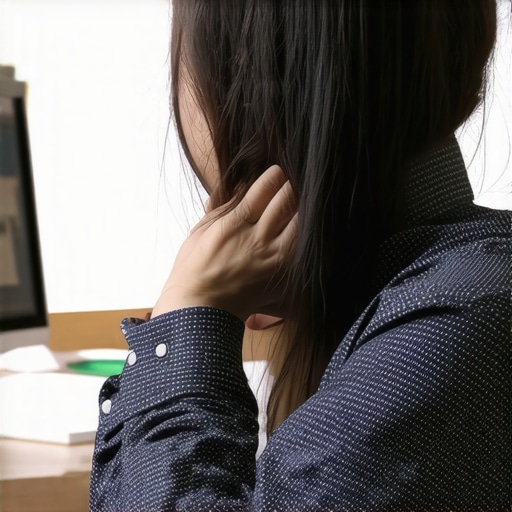
The Danger of Chasing the Pop
Then there is the ‘self-adjuster’ trap. You know the feeling—your neck feels tight, so you give it a quick twist until you hear that satisfying crack. It feels like instant relief, right? But here is the ‘oops’ factor: you aren’t actually hitting the stuck joint. Usually, you’re just forcing movement into the segments that are already too loose, which is the hidden link between neck pain and spinal health that many ignore. By repeatedly cracking your own neck, you create hypermobility in the ‘easy’ spots while the truly restricted joint stays frozen. This is often why your mid-back feels like it needs to pop every ten minutes—you’re stuck in a loop of temporary relief and long-term instability. True mobility mastery expert tips for back pain prevention and recovery involve targeting the specific restriction with precision, not just making noise.
Does your diaphragm hold the key to your chronic stiffness?
If you’re still struggling with that nagging ache after a long day, I want you to look at how you breathe. Most desk workers are ‘chest breathers,’ which keeps the neck muscles in a state of constant ‘on’ mode to help lift the ribcage. When you learn how to breathe into your lower back to reduce muscle spasms, you use your diaphragm to create internal pressure that supports the spine from the inside out. This isn’t just ‘yoga breathing’; it’s a mechanical necessity for spinal decompression. I’ve seen many people utilize chiropractic secrets to regain full mobility after injury by simply fixing their respiratory patterns to stop overusing their secondary respiratory muscles in the neck. Have you ever fallen into this trap? Let me know in the comments.
My Secret Weapons for Long-Term Spinal Health
I used to think that buying a fancy ergonomic chair would magically erase years of cross-legged sitting damage. It didn’t. In fact, I learned the hard way that why your perfect office chair is still making you slouch usually boils down to a lack of dynamic movement. Now, I keep a few non-negotiables on my desk. The first is a high-quality laptop stand, though you have to be careful because why your laptop stand is still causing neck strain often comes down to the angle of your wrists and eyes. I also keep a firm lacrosse ball under my feet to keep my plantar fascia active while I work. Dr. Stuart McGill, a world-renowned spine biomechanics expert and author of Back Mechanic, notes that ‘the best posture is the next posture,’ which really highlights the need for constant micro-adjustments throughout the day. By shifting my weight and using how to use a rolled up towel to fix your cars lumbar support even in my office chair, I keep my vertebrae from getting ‘stuck’ in one plane of movement.
Stop Using Your Massage Gun Like a Jackhammer
When massage guns hit the market, I was the first in line. I thought more power meant more relief. I was wrong. I ended up with more bruising than mobility because I was hitting bone and over-sensitive nerves. If you want to boost mobility and ease pain, you have to learn how to use a massage gun on your lower back safely. I only target the soft tissue of the glutes and the thick part of the erectors, never the spine itself. This tool is a supplement, not a replacement for restore your range how chiropractic care enhances movement through active stretching. It works best when used on a low setting to ‘wake up’ tissue before you start your movement routine.
How do I keep these results for the next ten years?
Maintenance is where most people fail. They do the work for two weeks, feel better, and then go right back to their old habits. I’ve found that mobility mastery expert tips for back pain prevention and recovery require a ‘trigger-based’ habit system. I don’t just ‘remember’ to stretch; I tie my movements to specific tasks. Every time I finish a meeting, I do the 30 second reset for tech neck fatigue. This prevents the cumulative load from becoming unmanageable. I predict that by 2030, we will see a shift toward ‘active furniture’—desks and chairs that subtly move for you—as we realize that static sitting is the real enemy. Until then, you need to be your own active furniture. I highly recommend you start with the 20 20 20 rule for desk workers and neck health today; it is the simplest way to unlock neck pain relief essential chiropractic tips for 2025 before the damage becomes permanent.
We often treat our bodies like statues, expecting them to hold static positions for hours without consequence. But the human spine was designed for motion, not for being folded into a permanent desk-jockey tuck.
The Lesson That Finally Stopped My Hip Snapping
For years, I believed that because I could fold my legs into a pretzel, my hips were healthy. The hardest lesson I learned was that hyper-flexibility without control is just a shortcut to injury. I realized my body was using ‘passive tension’ to hold me up because my deep stabilizers had quit. Once I started to enhance mobility naturally with chiropractic care, I discovered that true health is about how well you move, not how far you can stretch. Another lightbulb moment? My ‘tight’ hamstrings were actually just overworked from trying to keep my pelvis level while I sat lopsided for eight hours straight.
My Survival Kit for the Desk-Bound Warrior
You don’t need a gym full of equipment to reverse the damage of a sedentary job. My daily toolkit includes Dr. Stuart McGill’s book Back Mechanic, which taught me the actual physics of my discs and why certain postures are toxic. I also rely on neck pain no more expert chiropractic solutions that work because the tension in your upper cervical spine often mirrors what is happening in your hips—everything is connected through the dural sleeve. Finally, a simple firm lacrosse ball for self-myofascial release on the glutes is worth its weight in gold. These tools combined with boost your back health simple yet effective chiropractic hacks create a sustainable environment for your spine to thrive even in a digital world.
#IMAGE_PLACEHOLDER_E#
Take Back Your Range Before It’s Too Late
The transition from a stiff, painful workday to fluid movement is a journey of consistency, not intensity. Your body is incredibly resilient, but it needs the right signals to heal and reorganize its tissues. As you begin your back pain recovery how chiropractic care transforms lives, remember that every micro-break and every minute spent with both feet flat on the floor is a victory for your long-term mobility. Don’t wait for the ‘big pop’ or a total flare-up to take action. Start today by simply noticing how often you subconsciously tuck one leg under the other. Have you ever noticed that one side of your body feels significantly tighter than the other after a long Zoom call? Let me know your experience in the comments below!