The Hidden Link Between Digestion and Back Pain
I was lying face-down on my living room rug, staring at a stray dust bunny and wondering if this was my life now. Paralyzed. Every time I tried to roll over, a searing heat flashed across my lower back. I’d done everything right—or so I thought. I bought the fancy ergonomic chair, I stood up every twenty minutes, and I’d even started strengthening the hidden muscle that stabilizes your lower spine. But the pain kept coming back, usually around 7:00 PM. It took a massive, greasy burrito and a subsequent sleepless night for the lightbulb to finally flicker on. My back didn’t hate my posture; it hated my digestion.
The Day I Realized My Spine Wasn’t the Problem
I made a classic mistake early in my journey. I assumed the body was just a collection of independent parts, like a car. If the trunk rattles, check the trunk, right? Wrong. I spent a fortune on lumbar pillows while ignoring the fact that my digestive system was constantly inflamed. When your gut is stressed, your body doesn’t just keep that tension localized. It radiates. I was so focused on mechanical fixes that I missed how back pain recovery how chiropractic care transforms lives often involves looking at the whole person, not just a single vertebrae. Today, we’re going to bridge that gap. I want to show you how your internal organs and your spinal health are actually best friends—or, if you’re not careful, each other’s worst enemies.
Can your gut really pull on your spine?
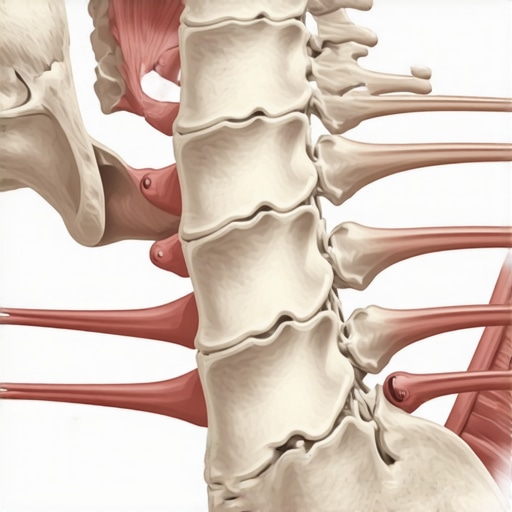
It sounds a bit like science fiction, doesn’t it? The idea that your small intestine could be the reason you can’t bend over to tie your shoes seems far-fetched. But here is the reality: your organs are tethered to your spine by a complex web of connective tissue called fascia. If an organ is inflamed or bloated, it creates a literal physical pull on your back. This isn’t just my opinion; research in the Journal of Osteopathic Medicine suggests that viscerosomatic reflexes—where internal organ stress manifests as musculoskeletal pain—are a very real clinical phenomenon. This is why why stretching your hamstrings wont fix your back pain if the root cause is actually a sluggish gallbladder or an irritated colon. We also have to consider how the connection between shallow breathing and back pain plays into this, as a bloated belly prevents your diaphragm from moving, forcing your back muscles to do double the work. Have you ever noticed your back pain getting significantly worse after a heavy meal or a period of digestive issues?
I remember trying to do a light deadlift about two weeks after that burrito incident. My form was perfect, my belt was tight, but I felt a sharp, tethering sensation—like someone was pulling a wire from my navel straight back to my L5 vertebrae. I realized in that moment that my core wasn’t weak; it was guarded. My nervous system was so preoccupied with the ‘fire’ in my digestive tract that it had locked down my lumbar spine as a defensive measure. If you’ve been stretching for weeks with no result, it’s time to stop chasing the symptom and start addressing the pressure valve.
Drain the pressure in your midsection
The first thing you have to do is stop treating your core like a rigid cylinder. When you are bloated or inflamed, the internal pressure increases, pushing against the spine from the inside out. I spent years thinking a ‘strong core’ meant a six-pack, but why your strong core might actually be too rigid is often the reason your back can’t handle a simple sneeze. To fix this, you need to master the art of the 360-degree breath. Instead of breathing ‘up’ into your shoulders, you need to how to breathe into your lower back to reduce muscle spasms by expanding your ribcage laterally and posteriorly. This creates space for your organs and reduces the literal physical tugging on your lumbar fascia.
Move your ribs to save your lumbar
Your ribcage and your pelvis are like the two ends of an accordion. If the middle—the gut area—is stiff and immobile, the ends can’t move properly. I found that my back pain was at its worst when I spent hours hunched over a laptop right after lunch. The compression literally stopped my digestive system from moving, which in turn locked up my mid-back. This is why we look at your ribcage movement for better mobility; if your ribs are stuck, your lower back has to overcompensate for every twist and turn you make. I started implementing a simple rule: never sit for more than thirty minutes after a meal. Even a brief walk helps the visceral organs shift and slide, preventing that ‘stuck’ feeling that radiates to the spine.
Stop the tug-of-war between your organs and your vertebrae
We often talk about spinal health in terms of bones and discs, but the soft tissue is the real conductor of the orchestra. When an organ is irritated, it sends a signal to the spinal cord, which can then cause the muscles in that same ‘segment’ to seize up. This is a visceral-somatic reflex. I’ve seen patients who think they have a slipped disc when they actually have a food sensitivity that is causing their psoas muscle to cramp. By utilizing revitalize your mobility proven strategies for back pain relief, we can address these neural pathways. If you’re stuck in a cycle of pain, try a ‘desk reset.’ I personally use the 5 minute desk reset for busy professionals to ensure that even on my busiest days, I’m not letting internal inflammation dictate my spinal posture. You have to actively give your body the signal that it is safe to let go of that protective guarding.
Reset your internal alignment naturally
Finally, you have to look at how you are supporting your frame from the ground up. If your gut is heavy and pulling your pelvis forward, your walk changes. I noticed my gait became ‘heavy’ and my heels would strike the ground with more force when I was bloated. This sent shockwaves straight up to my neck. Learning how to fix your gait for better spinal alignment starts with stabilizing your center. It’s not about sucking your stomach in; it’s about creating a stable platform where your organs can sit without putting a ‘lean’ on your spine. When you combine better internal health with targeted movement, you stop fighting your own body and start moving with it.
Stop Stretching Your Stiff Muscles and Start Looking for the Brake
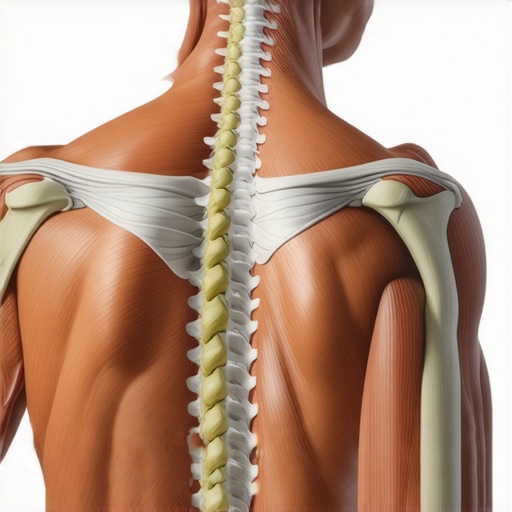
Everyone tells you that if you feel tight, you need to stretch. It’s the universal health advice, right? But in my years of obsessing over spinal mechanics, I’ve found that why your perfect posture is actually making you stiff often comes down to a fundamental misunderstanding of what ‘tightness’ actually is. Most people view a tight hamstring or a locked-up neck as a short rubber band that needs to be pulled. In reality, that tightness is often a ‘neurological brake’ applied by your brain. If your brain senses that a joint is unstable, it will lock down the surrounding muscles to protect you. When you aggressively stretch that protective tension, you’re essentially trying to cut the brake lines of a car parked on a hill. It feels better for five minutes, but the next morning, your body screams back with even more rigidity. Instead of pulling on the muscle, you should be strengthening your glutes to take the pressure off your spine, giving your nervous system the green light to let go.
Why Does My Neck Still Feel Stuck Even After a Good Adjustment?
This is the question that separates the beginners from those who truly understand spinal health. You get adjusted, you feel like a new person for three hours, and then—bam—the ‘tech neck’ returns. This happens because the spine doesn’t exist in a vacuum. A study published in the Journal of Manipulative and Physiological Therapeutics (JMPT) highlights that proprioceptive signals from the cervical spine are heavily influenced by peripheral inputs like your jaw and your feet. If you are constantly clenching your teeth, the connection between your jaw tension and your top neck bone will override any adjustment I perform. You’re fighting a losing battle against your own reflexes.
The Foam Roller Trap You Must Avoid
Here is the ‘oops’ factor I see constantly: people taking a hard foam roller and going to town on their lumbar spine (lower back). Please, stop doing this immediately. Your lower back needs stability, not more mobility. The lumbar vertebrae are designed for support, while the thoracic spine (mid-back) and hips are designed for movement. When you force a foam roller into the small of your back, you are often shearing the very discs you’re trying to save. I’ve seen more flare-ups from ‘self-care’ foam rolling than from actual gym accidents. This is why your foam roller might be hurting your lower back and why you should focus that energy on your upper back and hips instead. If you want a real fix, look at the foundation; the link between ankle mobility and lower back stability is a much more effective place to spend your time.
Check Your Foundation to Fix Your Neck
It sounds crazy, but why we look at your feet to solve your neck issues is based on the kinetic chain. If your arches are collapsing, your pelvis tilts, your ribcage shifts, and your neck has to compensate just to keep your eyes level with the horizon. This constant micro-adjustment is what leads to those nagging headaches. Before you assume you have a ‘bad neck,’ check if you’re actually suffering from a ‘bad foundation.’ If you can how to tell if your headache is starting in your neck versus your posture, you can stop chasing symptoms and start fixing the source. Have you ever fallen into the trap of stretching a ‘tight’ spot only to have it feel worse the next day? Let me know in the comments, and let’s figure out where your ‘brake’ is actually coming from.
Maintenance isn’t about doing a sixty-minute yoga flow every morning; it’s about the micro-decisions you make while the coffee is brewing. I’ve realized that the most effective way to stay out of my office and on the golf course is to treat my spine like a precision instrument that needs regular calibration. If you wait until you can’t turn your head to check your blind spot, you’ve already lost the battle. This is why I advocate for a ‘systematic reset’ rather than a ‘reactive fix.’ To keep the progress you’ve made, you need to transition into restore your back mobility proven chiropractic strategies that focus on daily habits rather than monthly emergencies.
Stop guessing and start measuring your progress
I’ve found that the best way to track if my ‘neurological brakes’ are staying off is through a simple daily check-in. It’s not just about how you feel; it’s about how you move. I use a few specific markers, like my ability to rotate my ribcage without my hips following, to gauge if my nervous system is happy. When you stop guessing, you can apply unlock neck pain relief essential chiropractic tips for 2025 before a small stiffness becomes a full-blown spasm. Consistency is the only way to move from temporary relief to a permanent change in how your body carries itself.
The one $5 tool I can’t live without
I carry a standard tennis ball in my laptop bag everywhere I go. Why? Because the ‘rhomboid burn’ is the silent killer of productivity for anyone who works at a desk. By learning how to use a tennis ball to fix that spot under your shoulder blade, I can shut down a tension headache before it even starts. It’s not about smashing the tissue; it’s about applying localized pressure that signals the brain to ‘reset’ the muscle tone. It’s a low-tech solution that provides high-level results if you use it the right way—focusing on the trigger points rather than just rolling aimlessly.
How do I maintain spinal mobility over time?
The key to longevity is building what Dr. Stuart McGill, a world-renowned expert in spine biomechanics at the University of Waterloo, calls ‘core stiffness.’ While it sounds counterintuitive to the goal of mobility, his research shows that a stable, stiff core actually allows the limbs—and the spine—to move more freely and safely. This is exactly why boost mobility ease pain chiropractic techniques unveiled often focus on stabilizing the midsection first. By utilizing his ‘Big Three’ exercises, you create a protective shield for your discs. I also make sure I’m never without proper support, specifically knowing the correct way to use a lumbar roll in your office chair to maintain the natural curve of my lower back during deep work sessions.
The future of spinal health is in your pocket
I predict that in the next few years, we are going to see a massive shift toward wearable biofeedback that monitors our spinal curves in real-time. We won’t just guess if we are slouching; our tech will provide a gentle nudge when our alignment drifts. Until those tools are perfected, we have to rely on our internal awareness. If you’re ready to scale your results and stop the cycle of recurring stiffness, I challenge you to try one advanced tip today: implement the 10 second stretch for people who type all day every single time you hit ‘send’ on an email. It sounds incredibly small, but these tiny frequent resets are the difference between a lifetime of fluid movement and a lifetime of just ‘managing’ the pain.
Why I Stopped Chasing the ‘Pop’ and Started Listening to the Brake
If there is one thing years of trial and error taught me, it’s that a loud ‘crack’ is never the final destination. I used to think that if I could just get my back to pop, the problem would vanish. The reality is that the stiffness you feel is your brain’s way of keeping you safe from a perceived threat—whether that’s a lack of stability in your hips or inflammation in your gut. Real mobility mastery comes when you stop fighting your reflexes and start providing the stability your nervous system craves. Remember, your body isn’t trying to annoy you; it’s trying to protect you. When you address the root—like the connection between your jaw tension and neck mobility—the ‘brakes’ finally come off naturally. #IMAGE_PLACEHOLDER_E#
The Survival Kit for the Modern Spine
I don’t believe in expensive gadgets that gather dust under the bed. My daily routine relies on a few high-impact tools that actually work. First, that simple tennis ball is non-negotiable for releasing the upper back. Second, I swear by a quality lumbar support; I’ve even learned how to use a rolled-up towel to fix your cars lumbar support during long commutes. Finally, I follow the philosophy of ‘micro-dosing’ movement. Instead of one long gym session, I sprinkle in the 10 second stretch for people who type all day to keep my fascia from gluing together. These aren’t just tips; they are the foundation of a resilient frame.
The Future of Your Movement Starts Now
You don’t have to live in a state of ‘managing’ discomfort. Whether you are dealing with a desk job or an old sports injury, your body has an incredible capacity for adaptation if you give it the right signals. By leaning into restore your back mobility proven chiropractic strategies, you are choosing a path of proactive health rather than reactive damage control. It’s about more than just avoiding pain; it’s about reclaiming the freedom to move, lift, and play without hesitation. Your spine is your lifeline—treat it with the respect it deserves, and it will carry you through your best years with ease. Have you ever noticed your back pain flaring up during times of high stress or poor digestion? Let me know in the comments below!