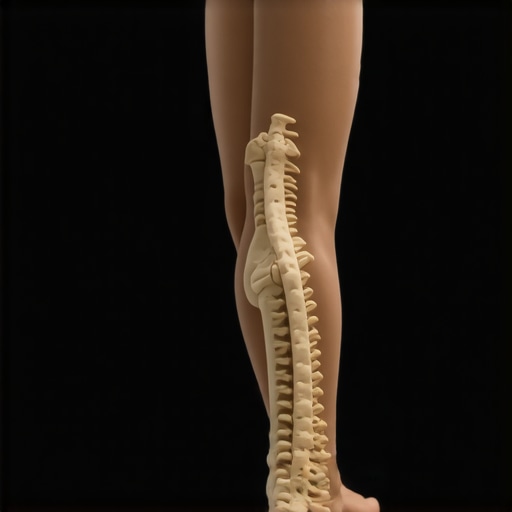
How Your Foot Arch Affects Your Lower Back Pain
I remember standing in line for a concert three years ago, leaning heavily on one leg, then the other, feeling that familiar, dull throb in my lower back. I thought I just had a ‘bad back’—a badge of honor for anyone over thirty, right? I spent hundreds on fancy office chairs and even tried sleeping on the floor. It wasn’t until I looked down at my worn-out sneakers that I realized I was building my entire house on a shaky foundation. My arches were collapsing, and my spine was paying the rent. We often treat our bodies like a collection of separate parts, but in reality, you are one continuous kinetic chain. Today, we are going to fix the foundation so your roof stops leaking.
Your Back Pain Actually Starts at Your Toes
The truth is that your feet are the primary shock absorbers for your entire body. When your arches—whether they are too flat or too high—fail to distribute weight correctly, the rest of your skeleton has to pick up the slack. I made the classic mistake early on of focusing only on where it hurt. I would stretch my lower back for hours, but the reality is that stretching your hamstrings won’t fix your lower back pain if your feet are causing a pelvic tilt every time you take a step. When your arch collapses, it forces your ankles to roll inward, your knees to follow, and your hips to tilt forward. This creates an exaggerated curve in your lumbar spine that no amount of ibuprofen can truly solve. If you have ever wondered why your lower back aches after standing for 10 minutes, your feet are likely the culprit. Have you ever noticed your back acting up specifically after wearing those flat-soled dress shoes or old flip-flops?
Is it really worth buying special shoes or inserts?
It is easy to be skeptical. I used to think orthotics were just for the elderly until I realized how much my gait was ruining my mobility. Research published in the Journal of Physical Therapy Science suggests that flat feet can significantly increase the angle of pelvic tilt, which directly stresses the lumbar discs. Learning how to tell if your sneakers are ruining your spinal alignment is the first step toward long-term relief. By choosing footwear with proper support or using a few simple yet effective chiropractic hacks, you can take the pressure off your spine. It is not about buying the most expensive gear; it is about understanding how your specific arch type interacts with the ground. Once you find the secret to walking without lower back fatigue, you will wonder why you waited so long to look at your feet.I stood in my kitchen one morning, trying to balance on my left leg while my coffee brewed. Within three seconds, I was grabbing the counter for dear life. My left ankle was weak, my arch was flat, and that exact side was where my sciatica always flared. It was a lightbulb moment. To stop the cycle, you need to start with a self-audit.
Check Your Balance Before You Check Your Spine
Think of your body like a Jenga tower; if the bottom block is crooked, the top ones have to lean just to stay upright. You can easily see this in action if you learn how to balance on one-leg to check your spine. If you wobble immediately, your brain is getting noisy signals from your feet, forcing your lower back muscles to stay in a state of constant, protective tension.
Fix the Foundation with These Physical Adjustments
Your calves are the anchors of your gait. When they are tight, they pull on your heels, which flattens your arches and yanks on the entire posterior chain. It is a domino effect where why tight calves cause lower back tension becomes painfully obvious during a long walk. Instead of just stretching your back, focus on rolling out your calves with a tennis ball for two minutes a day. This release allows your ankle to flex properly, preventing that jarring impact from traveling straight to your discs.
Master the Tiny Tilt for Instant Relief
Once your feet are sorted, you have to address the pelvic dump—that forward tilt that creates a deep, painful arch in your low back. You do not need a gym for this. Practicing the pelvic tilt trick for instant lumbar relief can be done while you are standing in line or sitting at your desk. It is about tucked-under stability, not brute strength. It is the same principle used in high-level mobility mastery expert tips for back pain prevention and recovery.
Upgrade Your Core Routine Without the Burn
Most people think core means crunches, but for a bad back, crunches are often a mistake. You need stabilization, not more flexion. By utilizing the dead bug variation that actually protects your back, you teach your spine to stay neutral while your limbs move. If you are currently in a flare-up, try the hip bridge modification for severe lower back sensitivity to wake up your glutes without aggravating the nerves. These are the building blocks of real progress. It is not about one big fix, but about these small, mechanical adjustments that stop the daily wear and tear before it starts. If you are still unsure if your footwear is the villain, revisit how to tell if your sneakers are ruining your spinal alignment to ensure you are not sabotaging your progress every time you leave the house.It is a common misconception that a tight muscle always needs to be lengthened. Often, your brain is using that tension as a biological parking brake because it does not trust the stability of the underlying joint. When you force a stretch on a muscle that is trying to protect you, the nervous system often responds by tightening up even more the next day. This paradox is exactly why your core strength isnt stopping your back from hurting—you are trying to build raw power on top of a nervous system that is still stuck in a defensive posture. Instead of applying more force, we need to improve the communication between your nerves and your muscles. Another massive mistake involves the neck. When people feel a pinch or stiffness, their first instinct is to pop it themselves to find relief. This is a dangerous trap. You are likely mobilizing the spinal segments that are already hyper-mobile while the truly stuck joints remain jammed. It is a major reason why you should never crack your own neck in the morning. You are essentially wearing out your ligaments without addressing the root mechanical restriction. This cycle of self-adjusting is often driven by why your neck muscles tighten during stress, creating a feedback loop of chronic pain and only temporary relief.
Why does my pain return even after I have strengthened my core?
The missing nuance here is motor control rather than brute strength. You can have the strongest abdominal muscles in the world, but if they do not fire at the precise millisecond required during a pivot or a sneeze, your spine remains vulnerable. Research published in the Journal of Biomechanics suggests that spinal stability is less about the maximum force a muscle can produce and more about the stiffness created by the coordinated timing of the entire trunk. This is why mobility mastery expert tips for back pain prevention and recovery always prioritize the quality of movement over the quantity of repetitions. 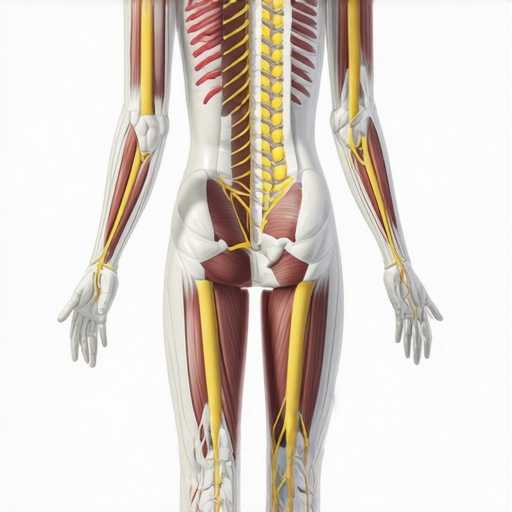 We also have to look at the hidden drivers that connect seemingly unrelated areas of the body. For instance, many people are surprised to learn that numbness or tingling in their fingers often has nothing to do with their wrists or carpal tunnel. It is exactly why we adjust your neck to fix your numb hands. By zooming out and looking at the whole chain—from the feet we discussed earlier up to the cervical spine—we stop chasing symptoms and start fixing the entire system. Have you ever fallen into the trap of stretching a muscle that just kept getting tighter? Let me know in the comments.
Once you stop the cycle of over-stretching, you need a proactive plan to stay mobile without spending hours at the gym. I’ve learned the hard way that recovery isn’t a destination; it’s a lifestyle. To stay pain-free, I rely on a small kit of essential gear that targets the mechanics we’ve discussed. One tool I never travel without is a firm massage ball. If you know how to use a massage ball to release hip flexor tension, you can essentially reset your pelvic alignment in a hotel room or at the office. This isn’t about deep tissue massage for the sake of it; it’s about signaling the nervous system to let go of that ‘protective brake’ we talked about earlier.
The Survival Kit for My Spine
We also need to address the digital elephant in the room: your workspace. I used to think my ergonomic setup was perfect until I realized that why your laptop stand is still causing neck strain often comes down to the height of your eyeline, not the stand itself. If you are looking down even slightly, you are adding pounds of pressure to your cervical discs. I now use a separate keyboard and mouse so my monitor can be exactly at eye level. This allows me to learn how to sit at your desk with zero back fatigue by keeping my ears stacked over my shoulders. When you combine these mechanical fixes with a few simple yet effective chiropractic hacks, like the Bruegger’s relief position every hour, you prevent the ‘creeping tension’ that usually leads to a Friday afternoon flare-up.
How can I maintain my spinal health without it becoming a full-time job?
Consistency beats intensity every single time. You don’t need a 60-minute yoga flow to see results. In fact, Dr. Stuart McGill, professor emeritus at the University of Waterloo and a leading authority on spine biomechanics, argues that ‘spinal hygiene’—the way you move during mundane tasks—is more critical than any specific exercise. This means focusing on why your back feels better when you keep moving through small, frequent micro-breaks rather than one intense workout. I personally commit to five minutes of ‘spinal hygiene’ every morning, focusing on the quality of my movement rather than the burn.
The Next Frontier of Mobility Mastery
Looking ahead, I predict we are going to see a massive shift toward bio-feedback wearables that monitor spinal shear in real-time. Instead of just counting steps, your watch will likely vibrate when your pelvic tilt exceeds a safe threshold during a walk. This level of mobility mastery expert tips for back pain prevention and recovery will move from the chiropractor’s office directly into our daily habits. We are moving away from ‘fixing’ pain and toward ‘optimizing’ the human frame for longevity. Try this today: Grab a tennis ball or massage ball and spend just two minutes on each hip flexor before you sit down for dinner. You’ll be amazed at how much lighter your lower back feels by bedtime.
What I Discovered After Years of Chasing Symptoms
For a long time, I thought I was doing everything right by stretching every morning, but I was actually ignoring the structural signals my body was sending. I’ve since learned that pain is rarely the source of the problem; it’s usually the messenger. I realized that why your core strength isnt stopping your back from hurting is often because the nervous system is stuck in a defensive loop. Another major shift was understanding the hidden link between neck pain and spinal health—if your head isn’t aligned, your lower back will always be working overtime to compensate. Lastly, do not underestimate the power of micro-adjustments throughout the day rather than one massive session of movement.
#IMAGE_PLACEHOLDER_E#
My Daily Essentials for a Resilient Spine
You do not need a gym full of equipment to maintain your progress, but a few specific tools make a world of difference. I always keep a lacrosse ball in my bag to address my arches, which is one of those simple yet effective chiropractic hacks that saves my lumbar spine during travel. If you work remotely, learning how to set up your laptop at a coffee shop pain-free is a non-negotiable for long-term neck health. I also highly recommend the works of Dr. Stuart McGill for anyone wanting to dive deeper into the biomechanics of the spine.
Your Journey to Lasting Movement Freedom
Reclaiming your mobility is not about being perfect; it is about being consistent with the foundational principles we have covered today. Whether it is adjusting your gait or fine-tuning your desk setup, every small win adds up to a future where you are not limited by your body. Remember that back pain recovery how chiropractic care transforms lives starts with the decision to stop treating symptoms and start addressing the root cause. You have the tools now to achieve mobility mastery expert tips for back pain prevention and recovery in your own living room. Which part of your daily routine do you think is currently causing the most stress on your back? Let me know in the comments below!